
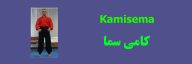
تشریح کامیسما
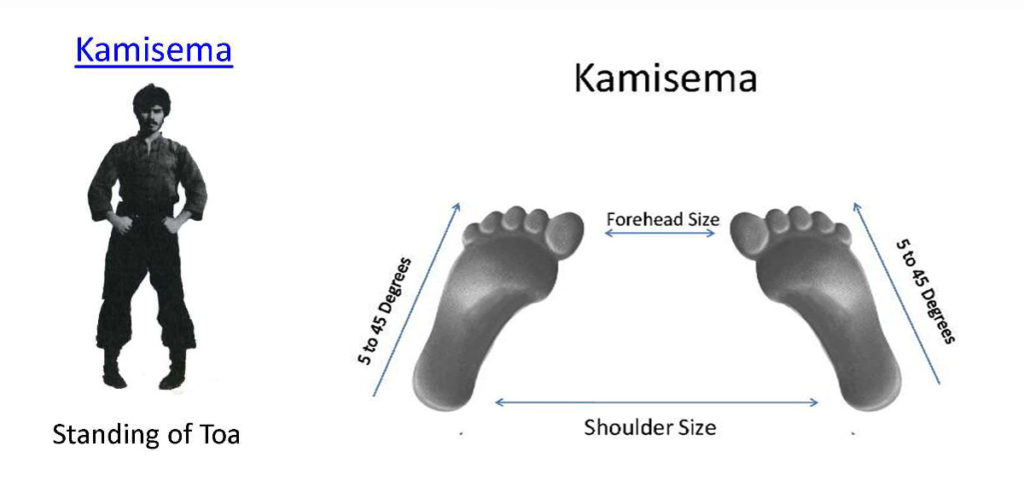
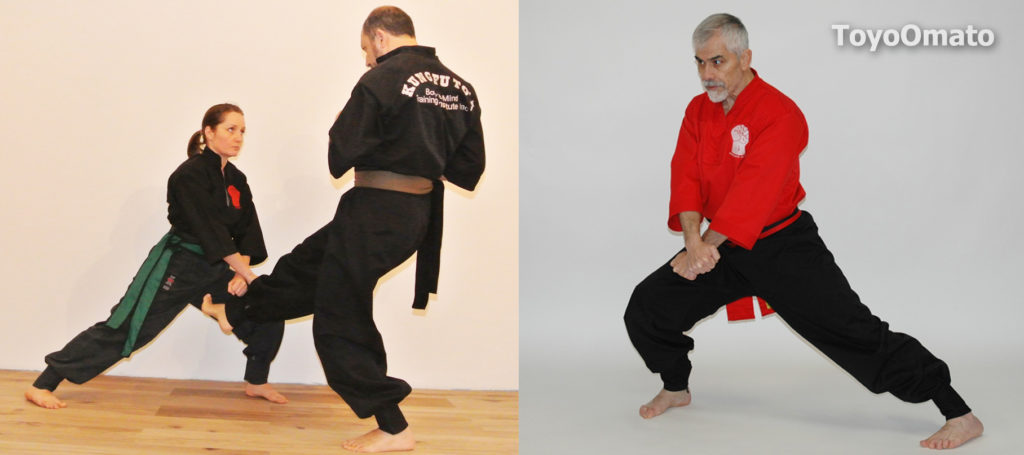
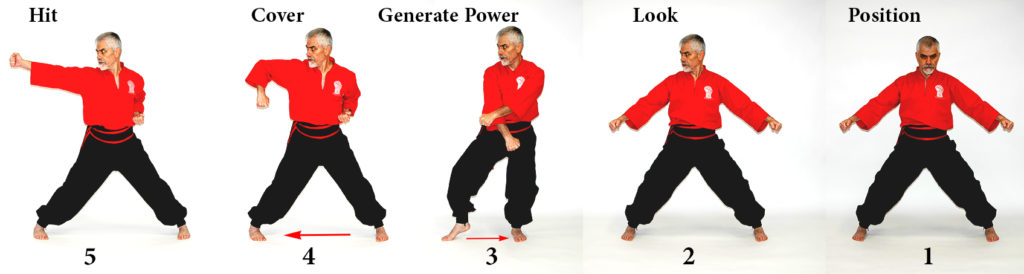
فرد هنرجو به حالت ایستاده قرار میگیرد طوری که پاها کاملا کشیده، فاصله آنها از همدیگر از پنجه به اندازه پیشانی و از پاشنه به اندازه شانه میباشند. سرپنجه آنها بین پنج تا چهل و پنج درجه بداخل گرایش دارند
Kamisema is a basic stance of a Kung Fu TO’A. The person stands while waiting for instructions from the Master of the class or before starting to perform a technique or a Mumaiy (form).
In the standing position, the feet are separated from each other as much as the forehead size, the heels as the shoulder size, the feet are inclined 5 to 45 degrees inward.
The arms are separated at least as much as a fist size and not wider than the shoulder size.
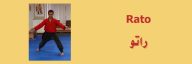
RATO
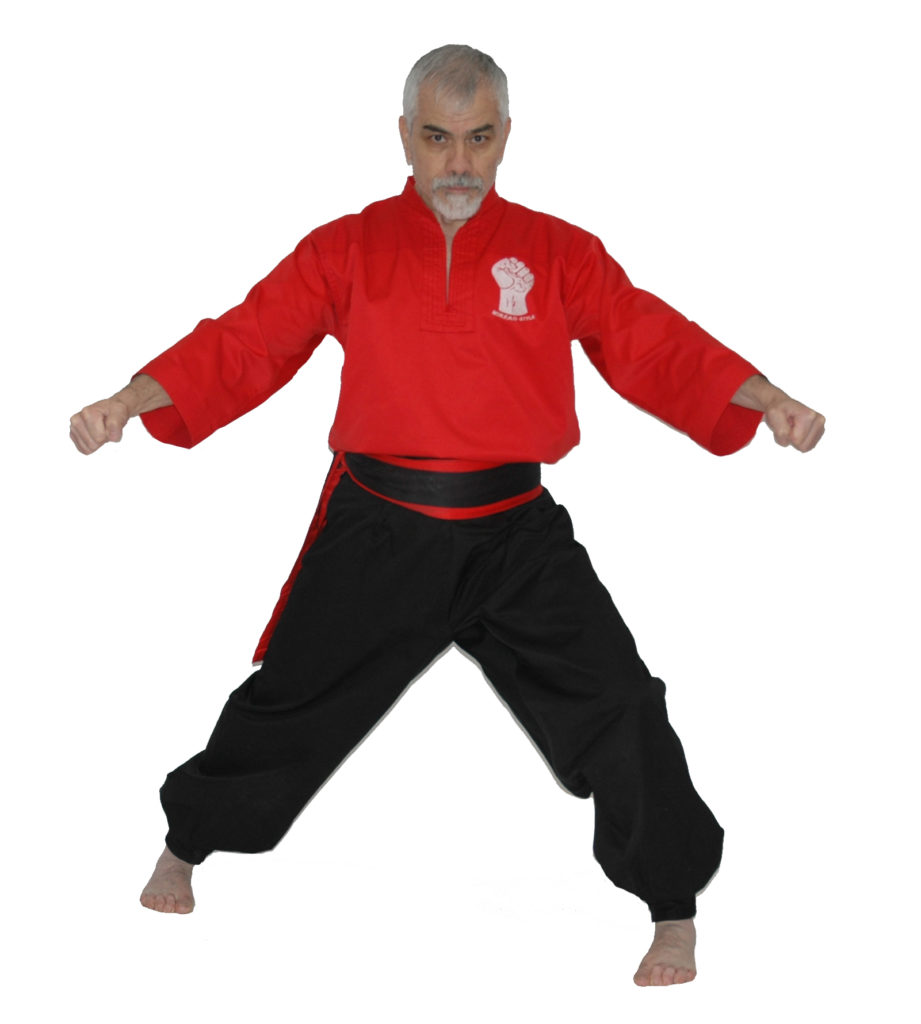
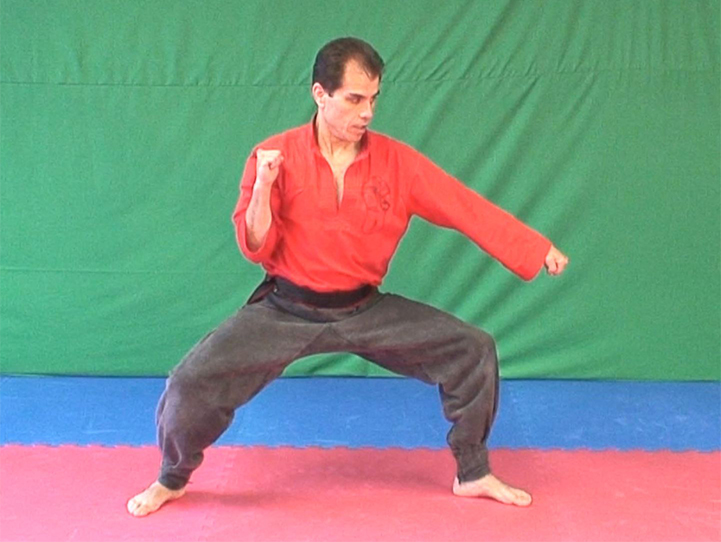
Of all classical stances, Rato is the most grounded and stable one. The Kung Fu To’a Ka will be able to keep the balance even though a pressure coming from all different directions (from the front, back or the sides) is put on him.
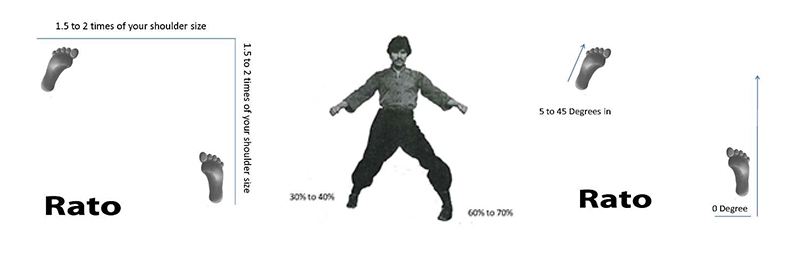
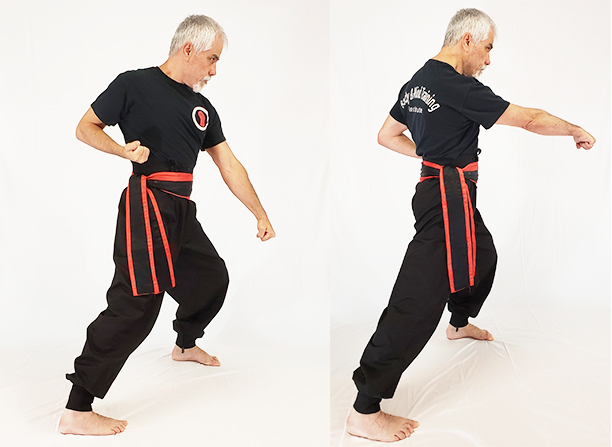
The upper body is perpendicular to the ground, the front foot is inclined 5 to 45 degrees inward, the back foot is straight, pointing at 0 degrees. The distance between the feet is 1,5 to 2 times the shoulders’ width
The front leg is bent and the back leg is straight. The body’s weight is devided 60% on the front leg , 40% on the back leg.
To prevent any damage to the ligament of the knee, the Kung Fu Ka can check the correct position: from the top of the knee he should always be able to see the tip of the toes.
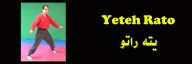
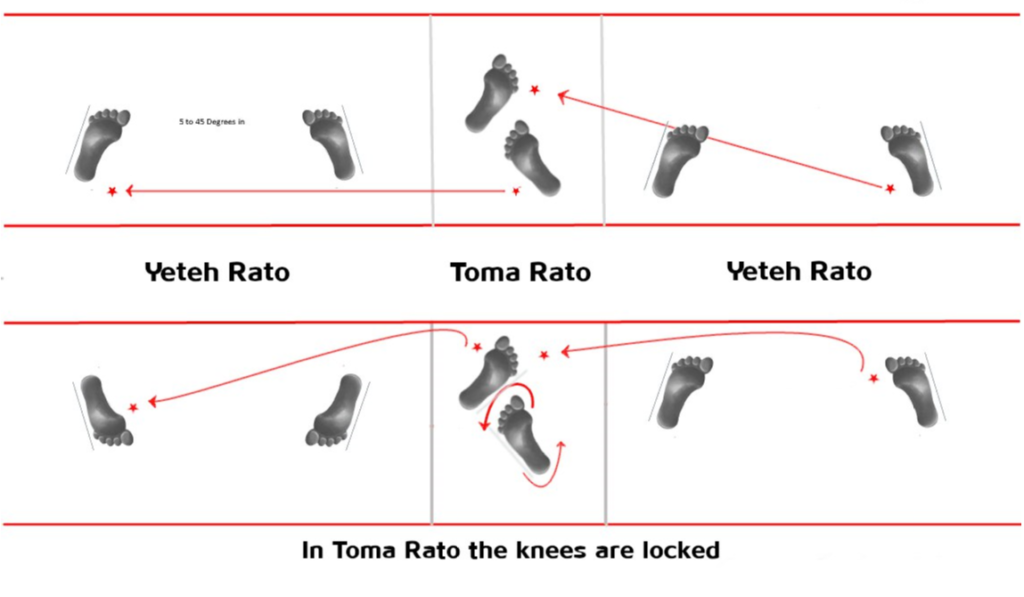
YETEH RATO
The term “Yeteh” means “Side”, or “Side-away”.
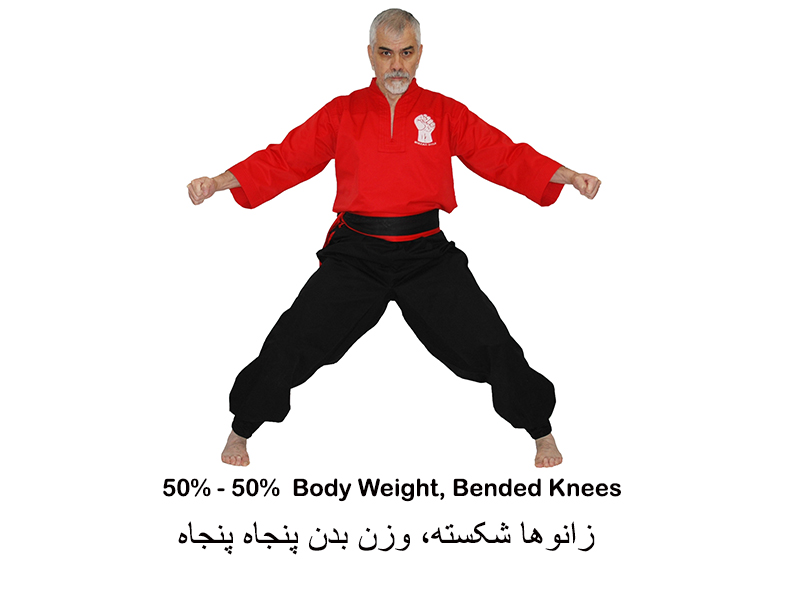
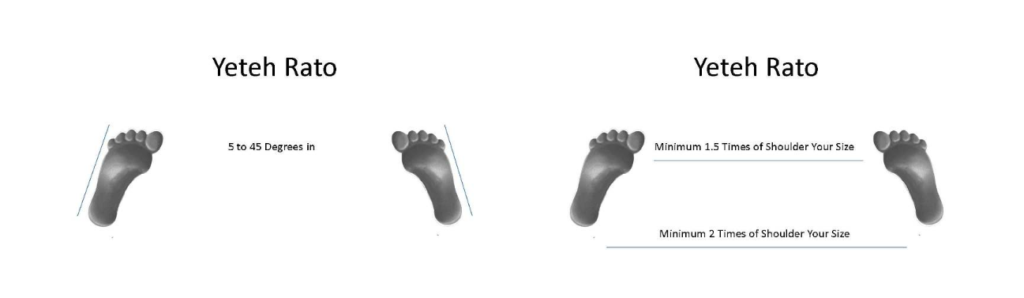
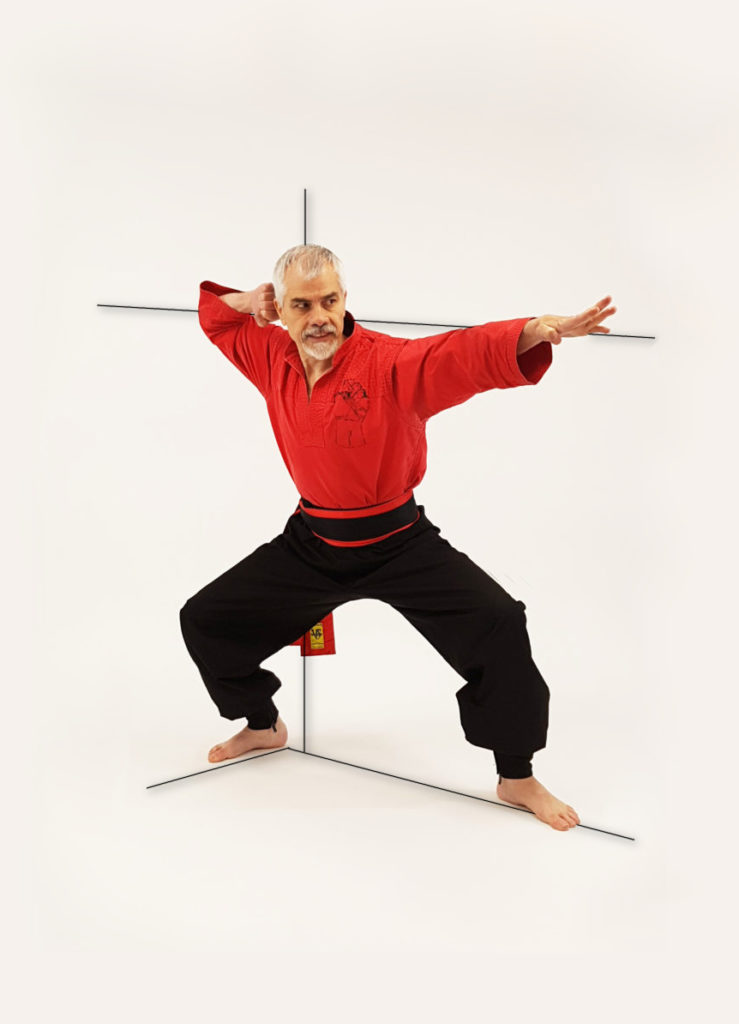
In this position the Kung Fu Ka stands with his legs on the same line. 50% of the body weight is on each leg, the feet are 5 to 45 degrees inward and they are separated from each other minimum from the toes 1,5 times the shoulders’ width and and twice from the heels.
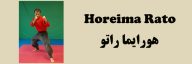
HOREIMA RATO
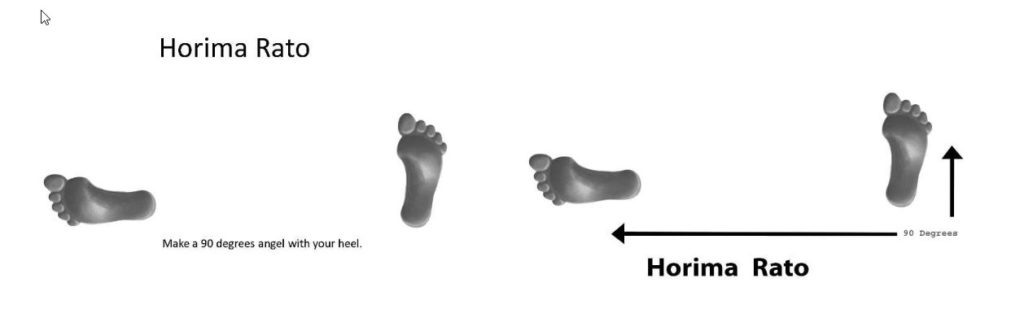
In Horeima Rato both feet are on the same line and perpendicular to each other and the heels forms a 90 degrees angle. Both knees are bent and the body weight is about 60-70% on the back leg and about 30-40% on the front leg. The distance between the feet is about 1,5 times the shoulders’ width.
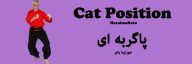
هورایما راتو – پاگربه ای
در این حالت زاویه پاشنه پاها مانند هورایما راتوی معمولی نود درجه نسبت بهم قرار دارند، ولیکن وزن بدن حدود هشتاد تا نود درصد روی پای عقب میباشد و حدود ده تا بیست درصد به روی پای جلو قرار میگیرد با توجه به اینکه پای جلو به روی پنجه قرار دارد و پاشنه از زمین بلند شده
CAT POSITION – CAT POSITION
In this position the feet are on the same line and perpendicular to each other, but differently from Horeima Rato, the front leg is on the forefoot. About 80 to 90% of the body weight is on the back leg and about 10 to 20% on the front leg. Cat position is also called “Small Horeima Rato”.
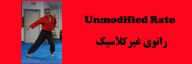
UNMODIFIED RATO
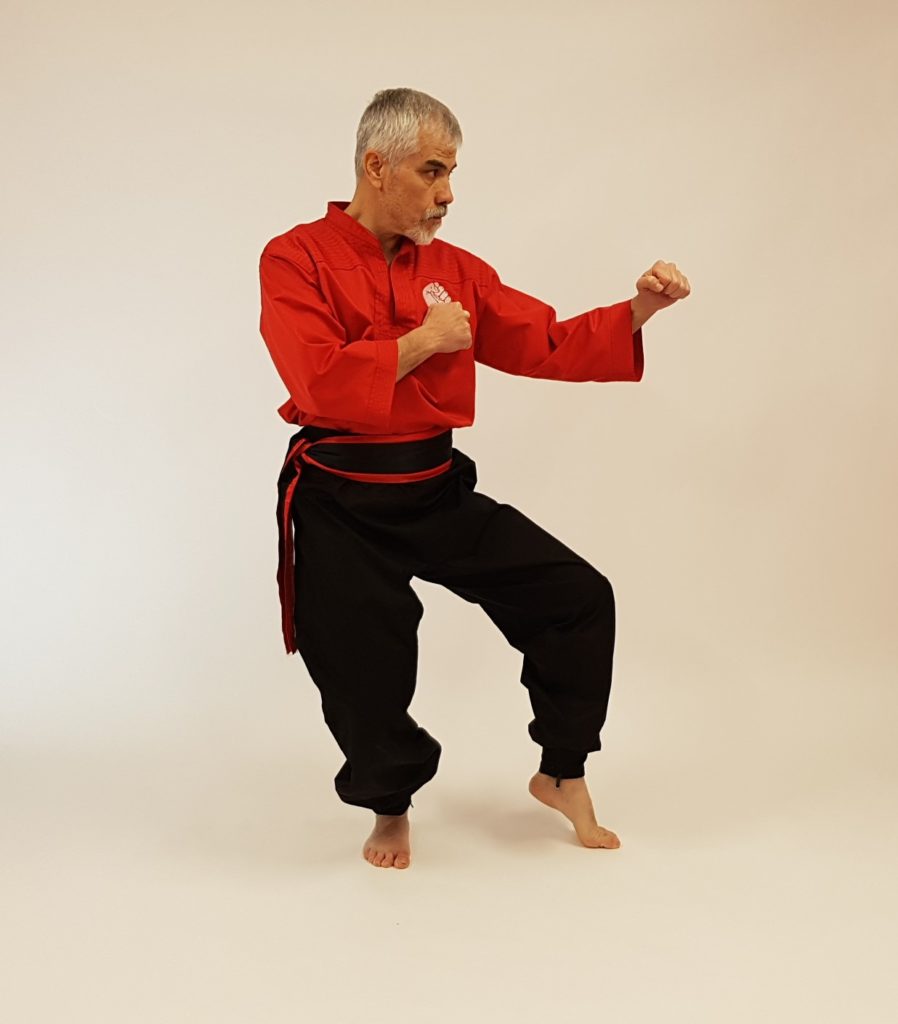
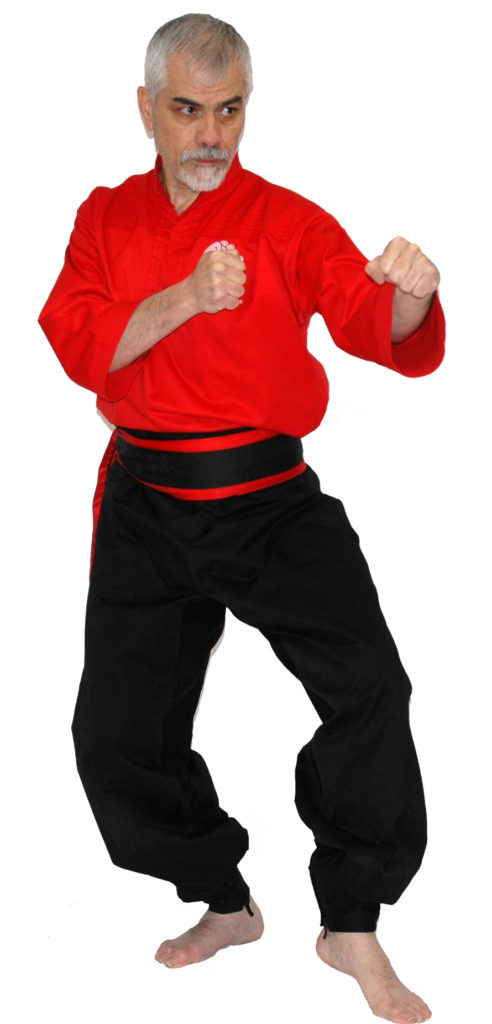
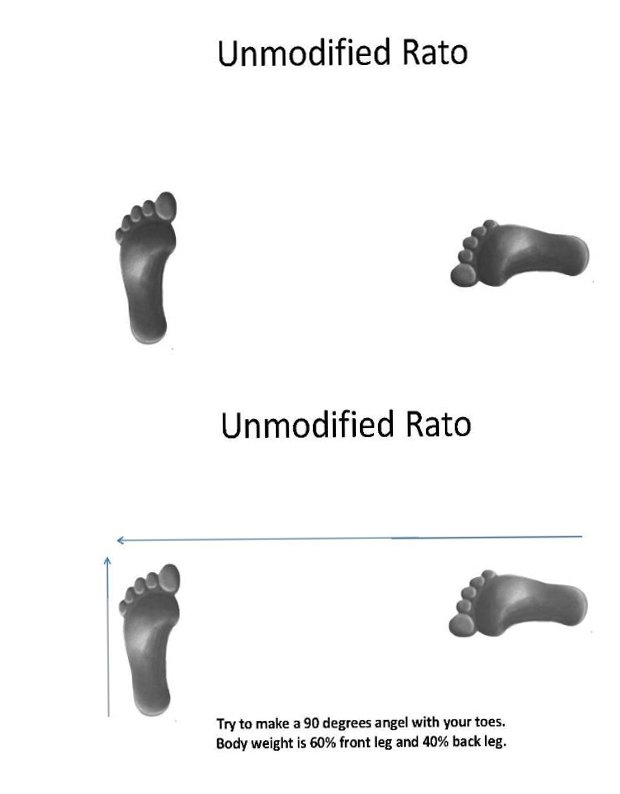
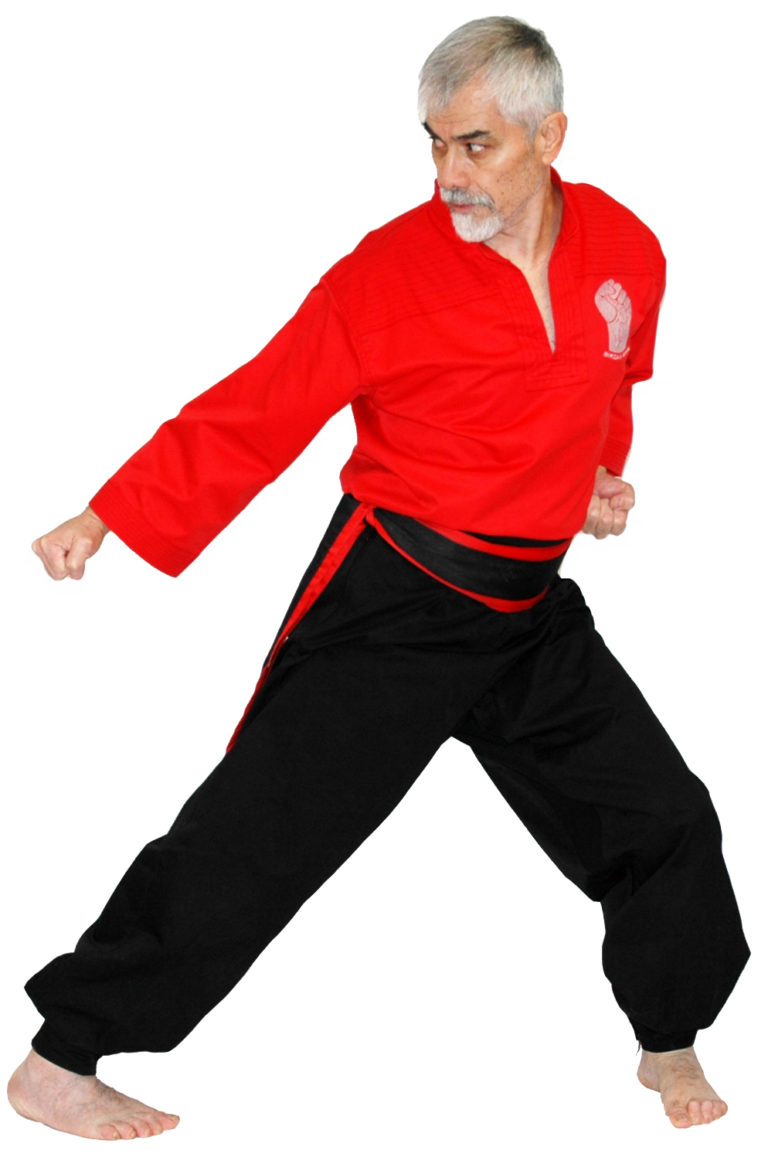
Unmodified Rato is an inverted version of Horeima Rato. Both feet are on the same line and perpendicular to each other, the toes forms a 90 degrees angle. The front leg is bended, the back leg is straight, about 60% of the body weight is on the front leg and about 40% on the back leg. The distance between the feet is about 1.5 times the shoulders’ width.
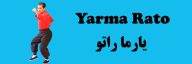
YARMA RATO
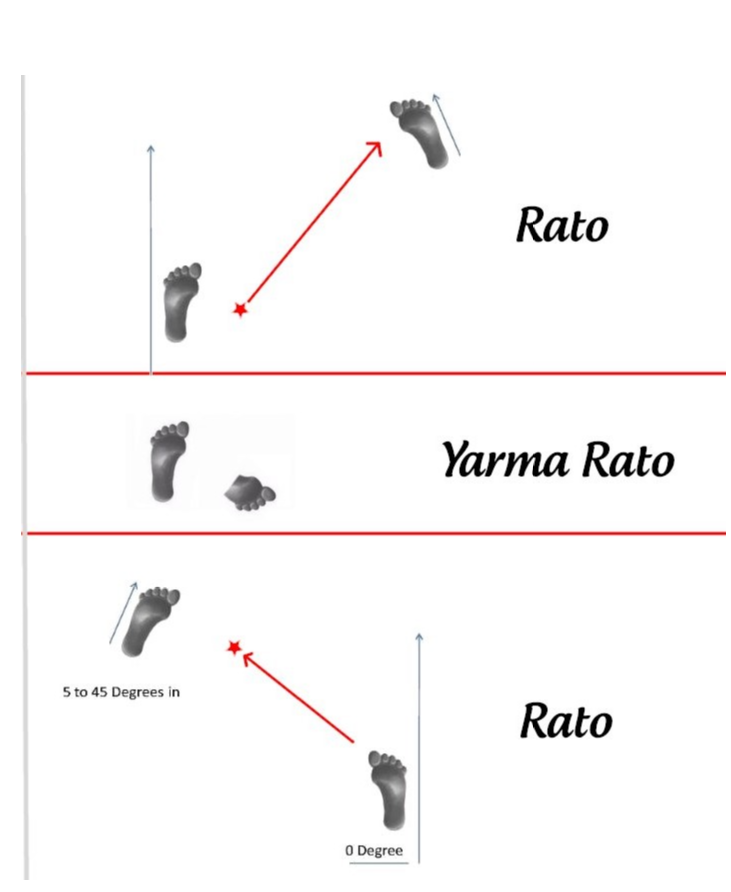
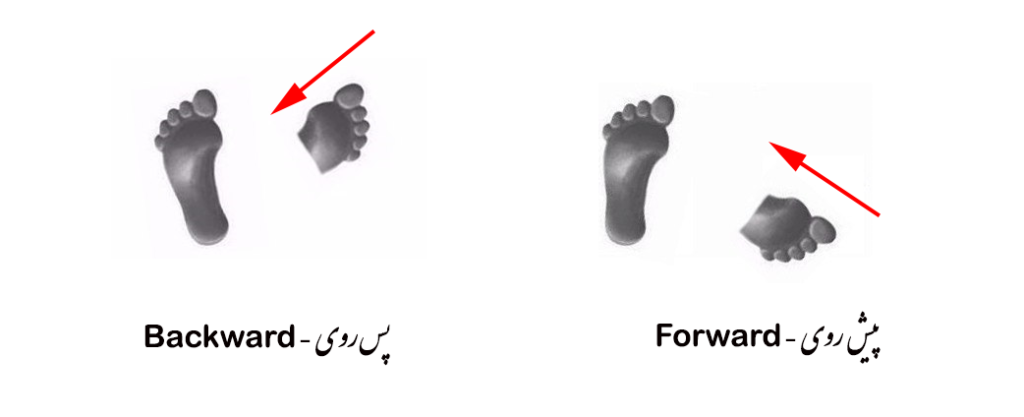
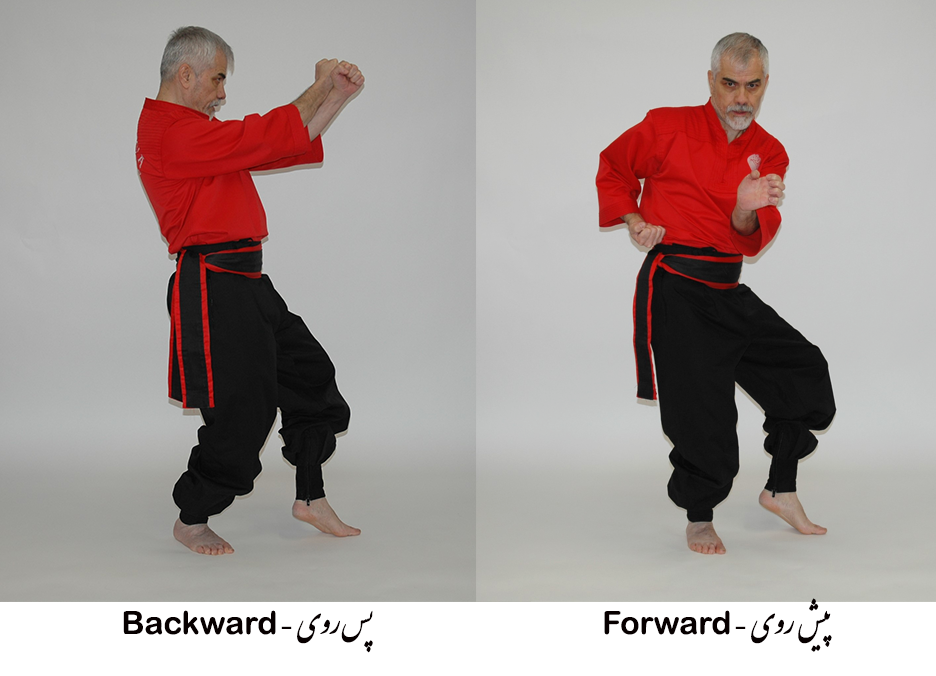
Yarma Rato is a transitional stance performed while moving forward or backward from one position to another one.
Like in Cat position (or Small Horeima Rato), both legs are bent, about 90% of the body weight is on the main leg and about 10% on the other leg’s forefoot. Differently from the Cat position, in which the feet are on the same line and perpendicular to each other, in Yarma Rato the moving leg is directed to the 45 degrees forward or backward, in accordance with the direction of the movement.
تشریح یارما راتو
یارما راتو یک استقرار دینامیکی (جا به جایی) است.
در این استقرار یک پا ثابت و پای دیگر برای جا به جایی مورد استفاده قرار می گیرد. پای ثابت یا ستون کاملا بروی کف پا و ۹۰% وزن بدن را تحمل میکند و پای متحرک بروی پنجه با ۱۰% وزن به روی آن عمل میکند
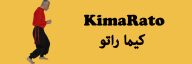
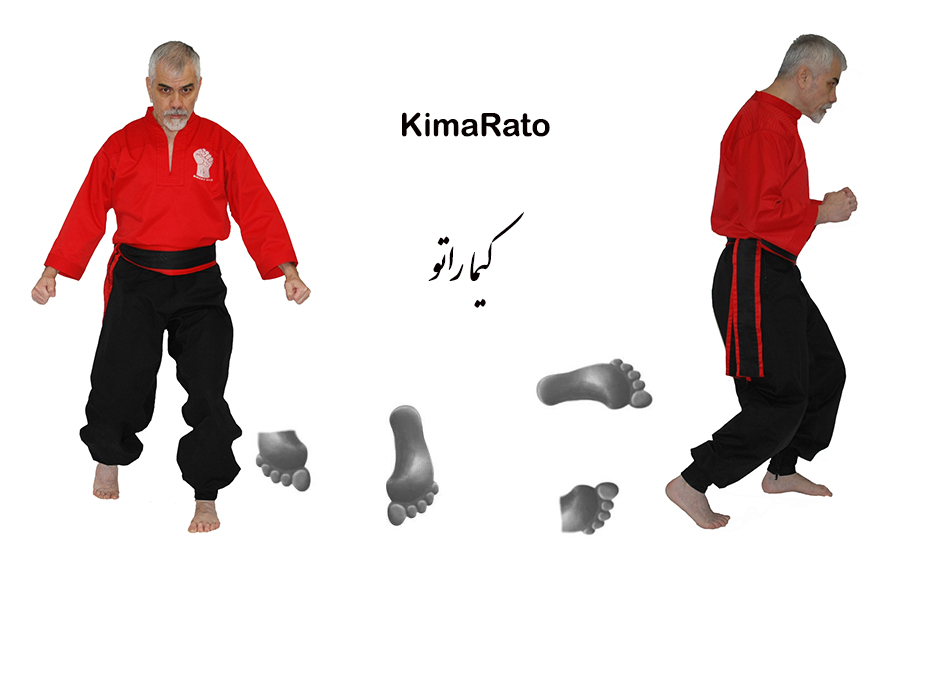
KIMA RATO
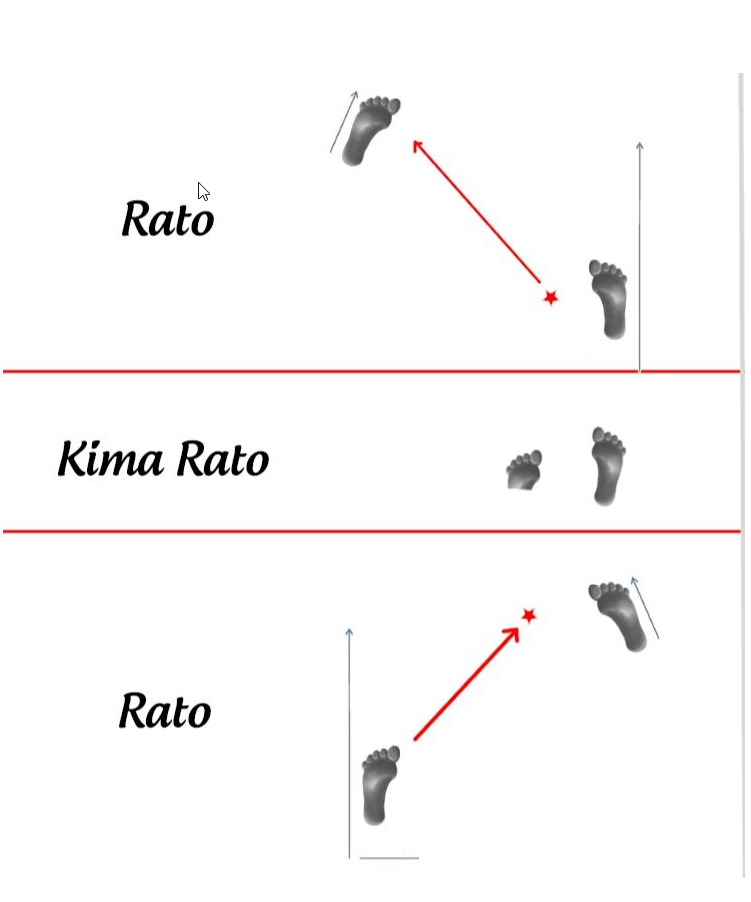
Kima Rato is a transitional stance performed when moving from one position to another one.
Like Cat Position and Yarma Rato, both legs are bent, about 80 to 90% of the body weight is on the main leg, and about 10 to 20% on the other leg’s forefoot. The direction of both legs is the same, at 0 degrees
تشریح کیما راتو
کیما راتو یک استقرار دینامیکی (جا به جایی) است
در این استقرار یک پا ثابت و پای دیگر برای جا به جایی مورد استفاده قرار می گیرد. پای ثابت یا ستون کاملا بروی کف پا و حدود ۸۰ تا ۹۰% وزن بدن را تحمل میکند و پای متحرک بروی پنجه با ۱۰ تا ۲۰% وزن به روی آن عمل میکند با توجه به اینکه هر دوی پنجه پاها بصورت مستقیم رو به جلو قرار دارند
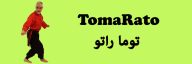
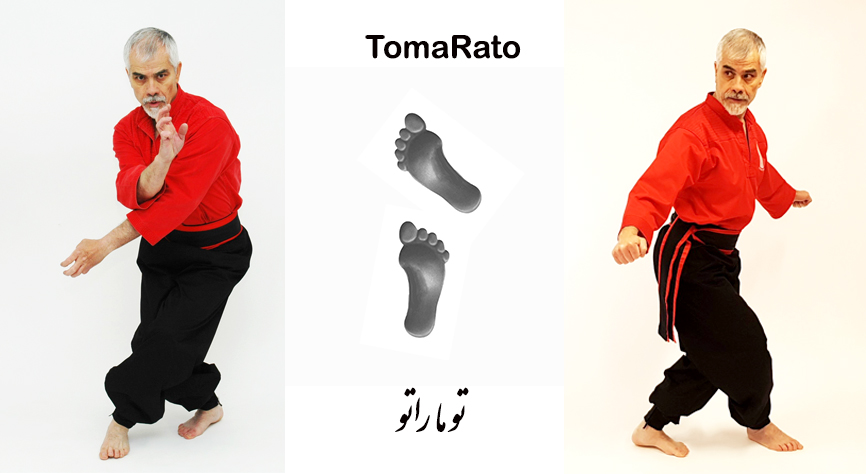
TOMA RATO
Toma Rato is the last transitional position. This dynamic stance can be used to change direction or to move to the side.
In Toma Rato both legs are bent, the body weight is about 50-50% when there is no move. The back leg and the knees are locked together, i.e. The back leg’s knee locked on the back of the front leg’s knee.
تشریح توما راتو
توما راتو آخرین استقرار دینامیکی (جا به جایی) در این دوره از درسها میباشد
در این استقرار یک پا ثابت و پای دیگر برای جا به جایی مورد استفاده قرار می گیرد. پاها در زمان ثابت بودن ۵۰ / ۵۰ وزن بدن را تحمل میکنند. زانوی پای پشتی در گودی پشت زانوی پای جلویی قفل میشود
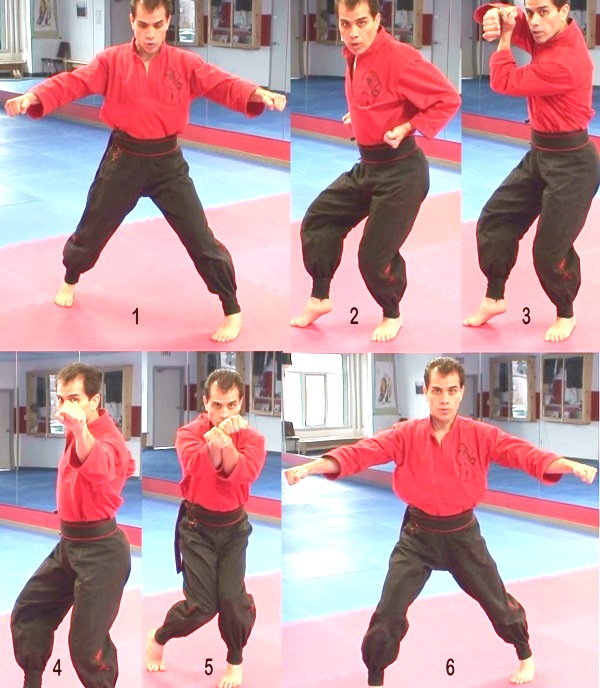
DUMA DEFENSE
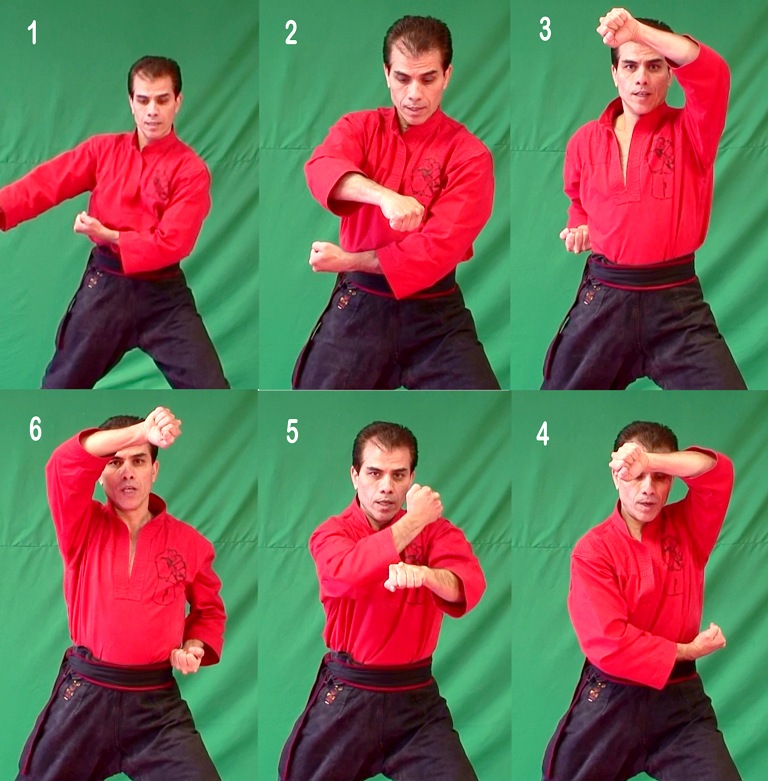
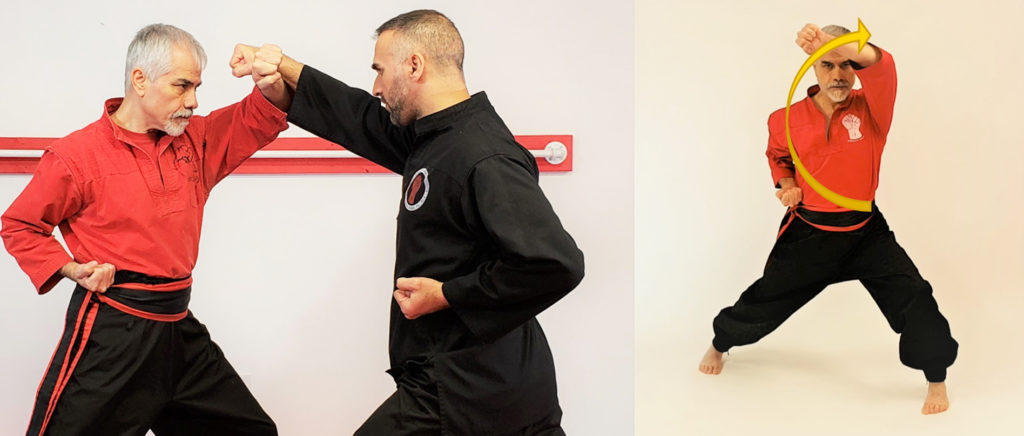
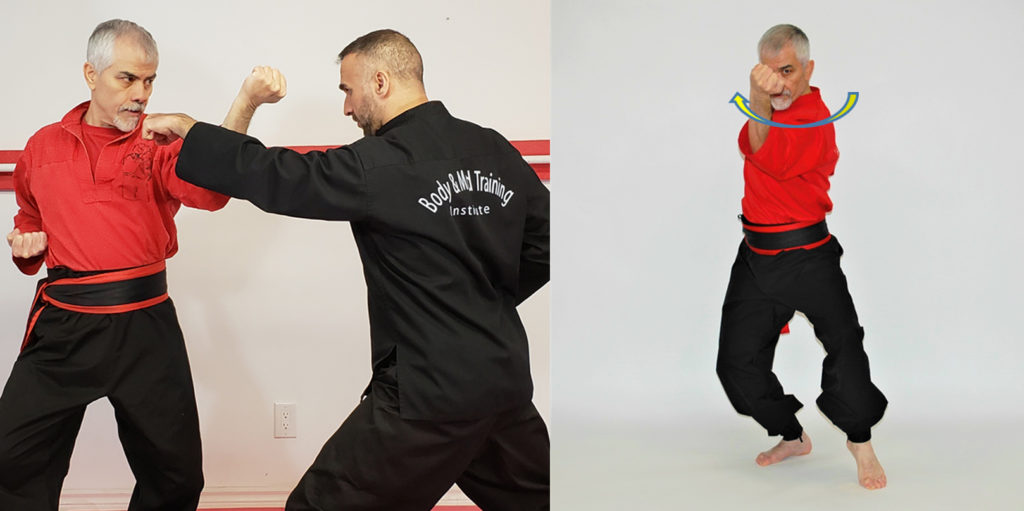
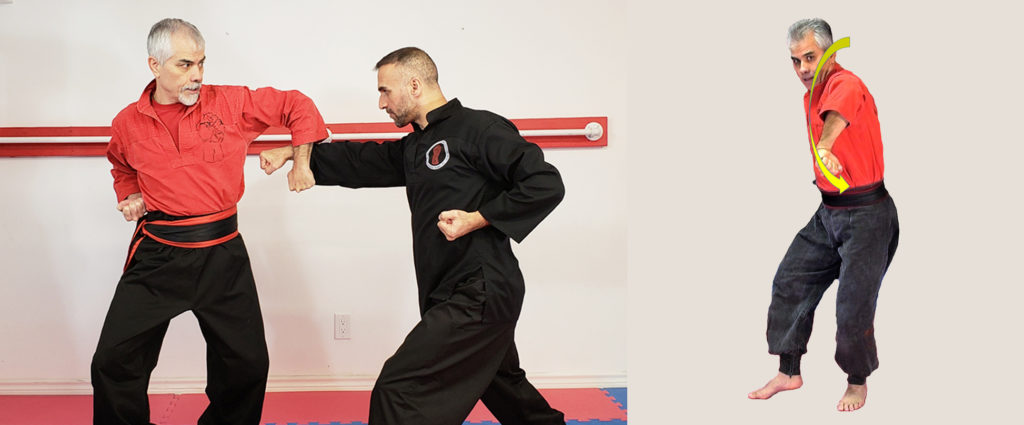
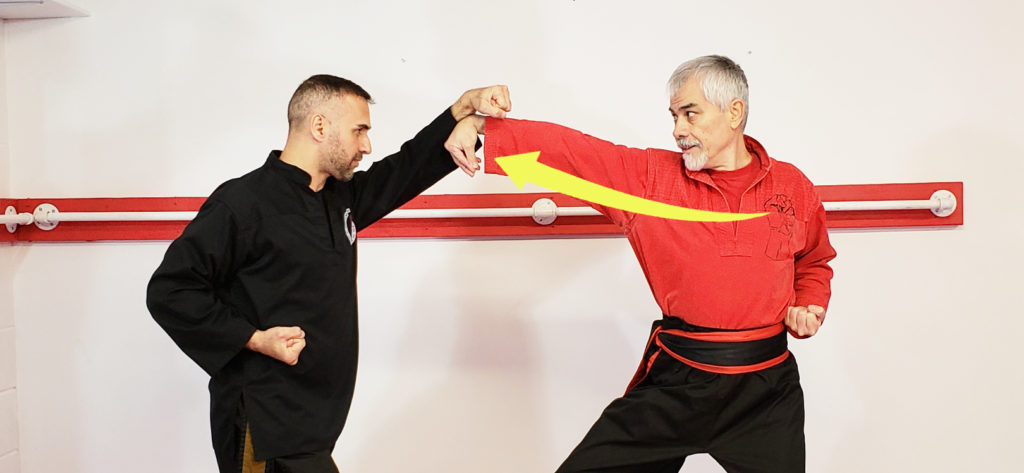
From Rato position, bring the arms close to the body at the Sash level for generating power and at the same time slide the rear leg to Yarma Rato, then move the action arm upward, so that the action hand is perpendicular to the ground and the reaction hand is external and parallel to the ground, the back of the fists are facing each other. The action hand moves forward to the 0 degrees to block from an incoming punch and the reaction hand goes down to the side. The upper body is turned so that the front shoulder is to the 0 degrees, the front arm is bent and the elbow forms a 135 degrees angle, the fist is inclined at 45 degrees. Continue the movement and protect the front of the body by turning the back leg until the knees are touching each other and the arms are locked, doing a Chino defense.
از حالت راتو و چینو، (شکل ۱) با حرکت پای عقب به جلو و همزمان هر دو دست بصورت یک نیم دایره از پشت به پهلو، قدرت گیری میکنید. (شکل ۲) در ادامه، دستها به سمت بالا حرکت میکنند طوری که دست چپ عمود بر زمین، داخل بدن و دست راست موازی سطح زمین و خارج بدن عکس العمل سازی میکنند.(شکل ۳) سپس دست چپ از چپ براست جلو بدن را با قسمت خارجی خود دفاع میکند. تکنیک “دوما” ۱۳۵ درجه زاویه آرنج میباشد (شکل ۴)( شانه ها، دست دفاع کننده و بدن در یک خط قرار میگیرند.) ادامه، پایی که به جلو آمده بر میگردد با لمس کردن زانوها باهم بالای بدن بوسیله دستها بلوکه شده (شکل ۵) با پیشروی به چینو میروید. (شکل ۶)
AFMA
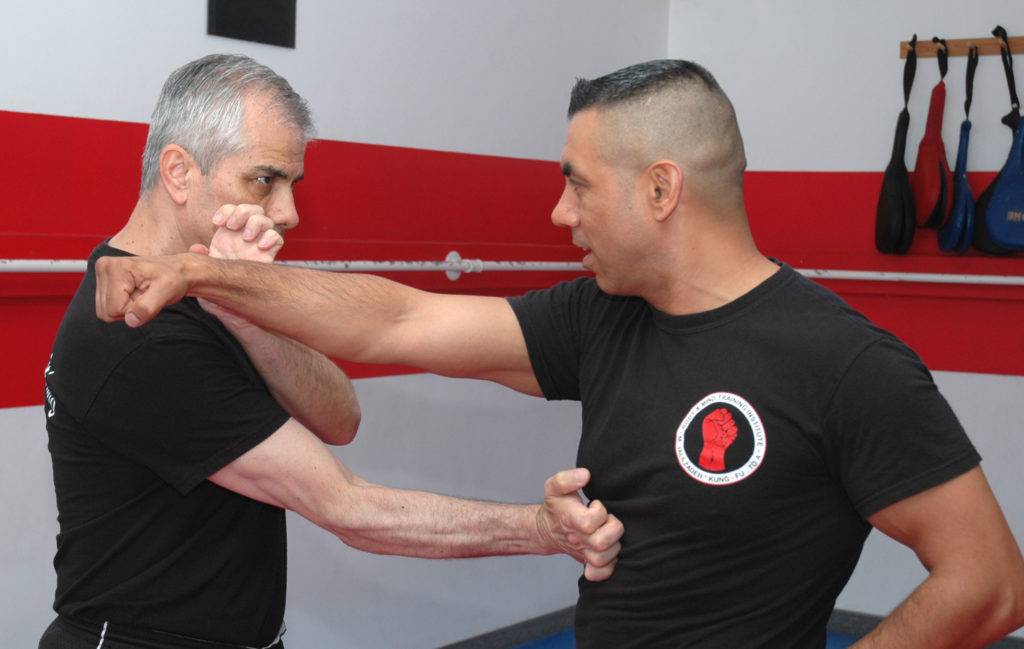
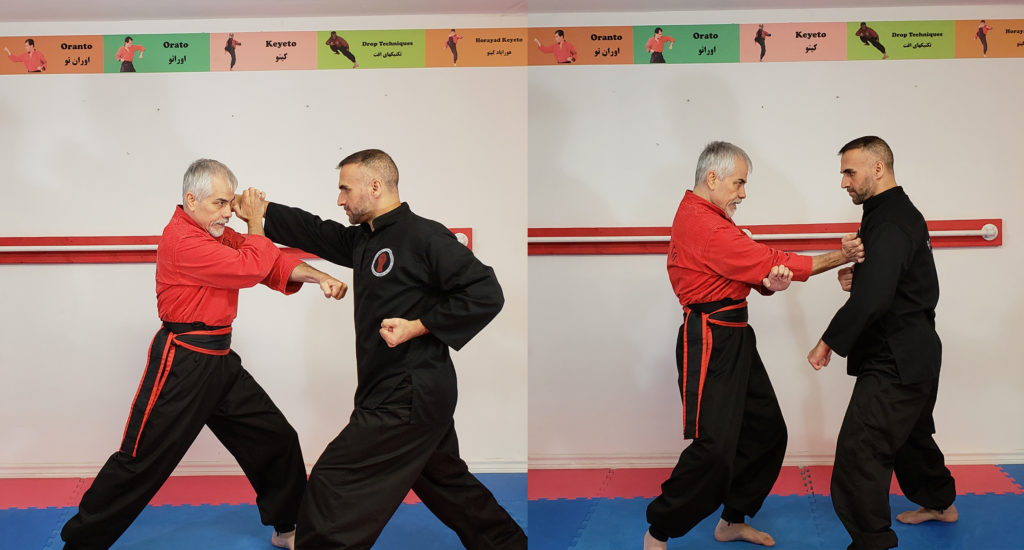
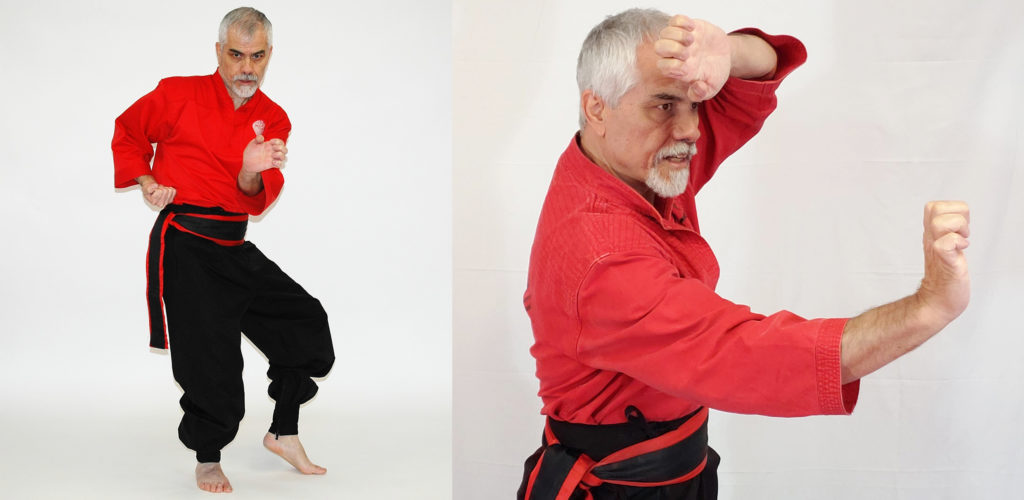
Afma is a defensive technique which covers the body from the sash line to the top of your head. (Pic 1) The left arm (action arm) moves to the opposite side (right) while keeping it close to the body, instead the right arm is used as the reaction. (Pic 2) Reminder that the action arm must be inside and close to the body constantly. The left (action) arm keeps moving up and the right (reaction) arm comes down simultaneously. The action arm stops 5 to 10 centimetres in front of your forehead. (Pic 3). The other arm can be viewed in pictures 3, 4, and 5.
تکنیک آفما بمنظور پوشش و دفاع جلو ی بدن از شکم تا بالای سر را میباشد.
برای انجام این تکنیک دست عمل کننده (چپ) از منتها علیه سمت راست از پایین تا بالا را درو کرده دفاع آفما انجام میشود. توجه کنید که دست عمل کننده از داخل و نزدیک بدن تکنیک را انجام میدهد و عکس العمل بیرون و خارج از بدن. *مهم- (همیشه دست عمل کننده چه دفاعی و چه نفوذی نزدیک بدن و عکس العمل بیرون از آن عمل میکند.) در انتها دست عمل کننده تا روبروی پیشانی بالا میرود طوری که مچ دست از آرنج بالاتر قرار میگیرد و فاصله ی آن باندازه پنج تا ده سانتیمتر از سر میباشد.
ORANTO
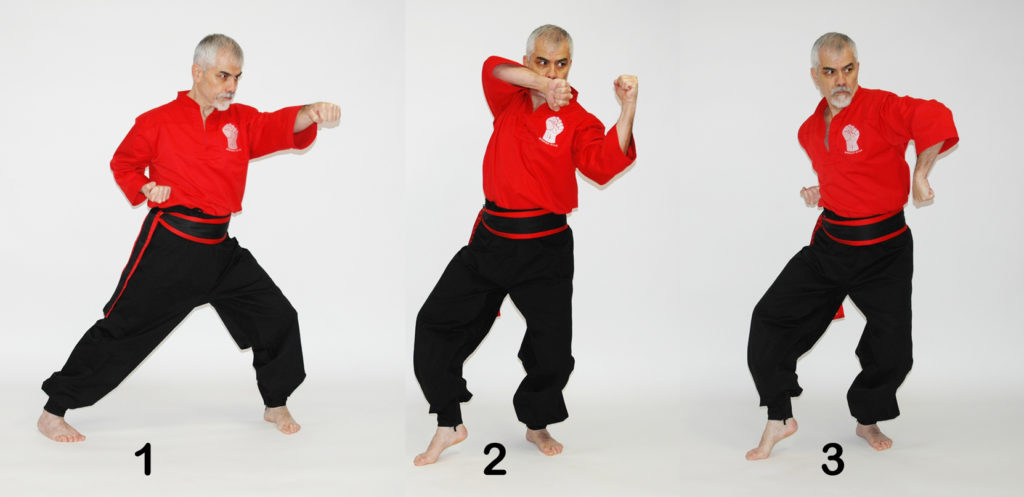
From Rato position and Chino, the action hand moves under the reaction hand and comes up with the elbow to make an early defense from an incoming technique, then the arm turns and defends the upper body at 0 degrees while the reaction hand goes to the side of the body at Sash level. The arm makes a 135 degrees angle, to make the muscles tight the fist is bent so that its back part is facing the ground. The upper body is turned so that the shoulders are inclined about 5 to 10 degrees to the side. Remember to keep always the body perpendicular to the ground and make sure not to block your sight with your own fist.
برای انجام آن از داخل به خارج ابتدا بمنظور قدرت گیری دست عمل کننده به زیر دست عکس العمل میرود (شکل ۱) و با حرکت آرنج به بالا (شکل ۲) برای پیشگیری و دوران، با قسمت داخل ساعد دفاع اوران تو را همزمان با حرکت مخالف دست دیگر بعنوان عکس العمل تکنیک را انجام میدهد.
ORANTO From Out
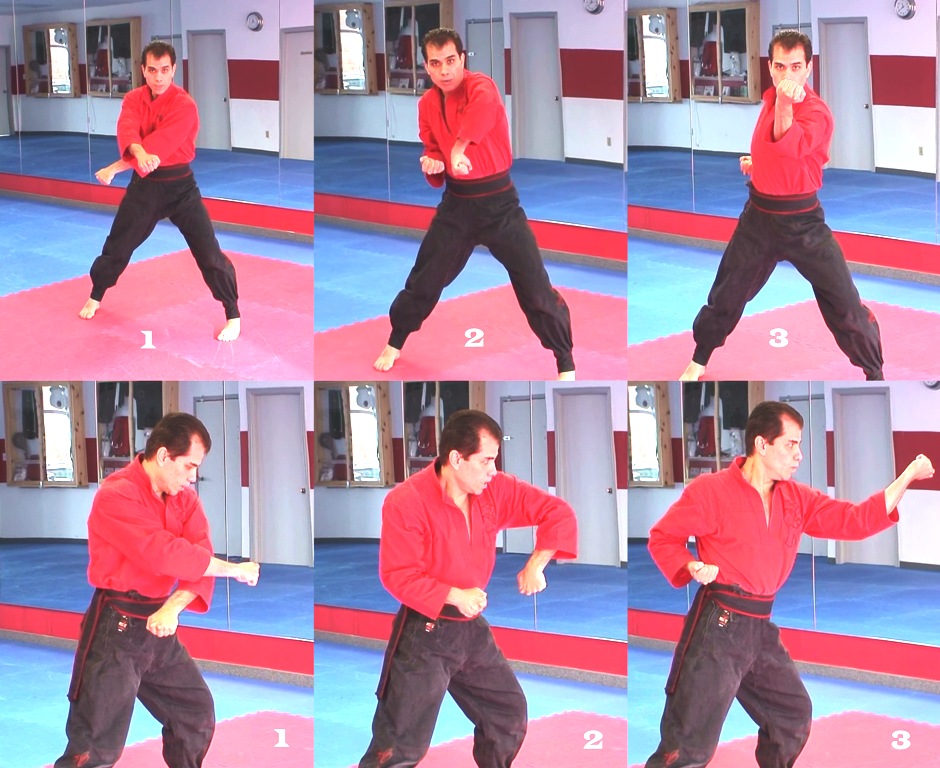
From Rato position with right arm front, move backward to YarmaRato position taking the right arm back to the side and left hand to the front of the chest (p 2) by taking the left arm to the side of the body as a reaction, same time the right arm defense the oncoming punch from right to left front of the body (p 3). The upper body turns minimum 45 degrees to maximum 90 degrees.
در حالت راتو و دست راست جلو (حالت ۱) دست عمل کننده (دست راست) همزمان با پای جلو برای قدرتگیری به عقب کشیده میشوند (یارما راتو) و دست عکس العمل به روبروی سینه میآید طوریکه کف دستها به سمت جلو برگشته باشند (حالت ۲) سپس در یک گردش ۹۰ درجه با پیچش بالا تنه با قسمت داخلی ساعد و دست دفاع اورن تو از خارج را انجام میدهیم (حالت ۳)
زاویه آرنج ۱۳۵ درجه، مشت دست روبروی چشم، زیر ابرو و چرخش بدن بین ۴۵ تا ۹۰ درجه در جهت تکنیک میباشد
ORATO
From Rato position with left arm front (P1), move forward to YarmaRato position and turn the body and take the right arm up to the side parallel to the ground and left arm upright to the front (P2) by turning the left arm 180 degrees and blocking up to down from the side for incoming punch (P3).
اوراتو
در حالت راتو پای چپ و دست چپ جلو (شکل ۴۸ حالت ۱) با حرکت پای راست بجلو بدن را زاویه نود درجه میپیچآنیم (یارما راتو) و برای قدرتگیری دست چپ را از آرنج خم میکنیم طوریکه ساعد عمود برزمین باشد و دست راست به بالا آمده، ساعد موازی سطح زمین شود (حالت ۲). در یک چرخش ۱۸۰ درجه دست چپ از بالا به پایین کاملا جلوی بدن را دفاع میکند و دست راست بعنوان عکس العمل به پهلو روی شال کشیده می شود (حالت ۳)
در انتها زاویه آرنج دفاع کننده ۹۰ درجه میباشد
WeimaDuma
From Rato and Chino position (P1) the right arm moves to the top of the left arm to make power (P2) then both of them bent over front of the chest turning in (P3) by opening the right forearm from top to down, blocking the incoming kick by side of the fist and arm. Same time the left hand goes to the left side of the body for the reaction (P4).
وایما دوما
در حالت راتو و چینو پای راست جلو (شکل۴۹ حالت ۱) دست راست برای قدرتگیری بروی دست چپ آورده (حالت ۲) سپس دستها را با یک گردش بدور خود بسمت سینه جمع کرده (حالت ۳) با عکس العمل سازی دست چپ همزمان دست راست از بالا به پایین بدن را از قسمت چپ به راست تحت پوشش دفاع می کنیم (حالت ۴). (توجه داشته باشید که حرکت دستها در همه حال، عمل و عکس العمل گردش و دوران به دور خود را انجام دهند).
NimaOsayto
From TomaRato position (P1) the right arm moves to the under of the left arm to make power (P2) then the right arm moves forward the side way with gathering the fingers together and bent the wrist (P3), by opening the arm with bent wrist hitting under the incoming punch and the left arm goes to the side for the reaction (P4).
نیما اوسایتو
در حالت توما راتو و چینو (حالت ۱) دست راست برای قدرتگیری به زیر دست چپ آورده (حالت ۲) سپس دست چپ به عکس العمل رفته و دست راست از مچ به داخل شکسته میشود و پنج انگشتان را به هم کاملا نزدیک میکنیم (حالت ۳) در ادامه با قسمت خارجی مچ دست از پایین به بالا ضربه حریف را دفاع میکنیم (حالت ۴)
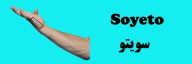
Soyeto Defense
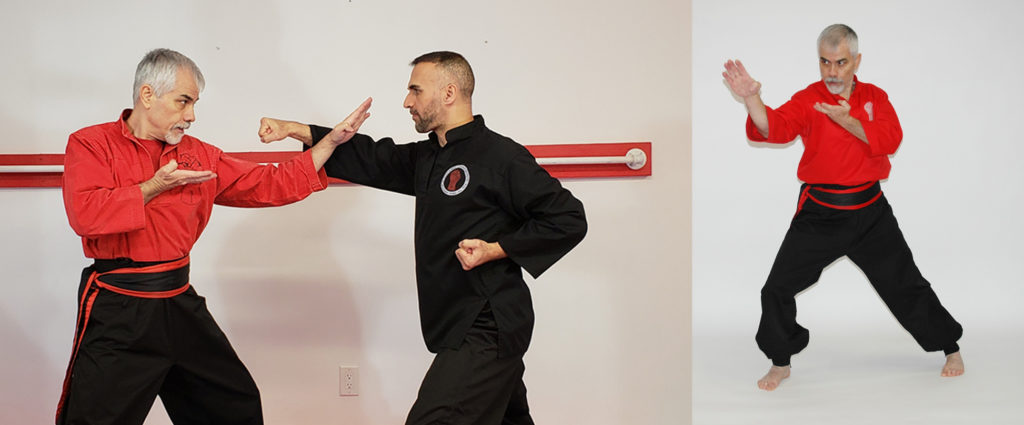
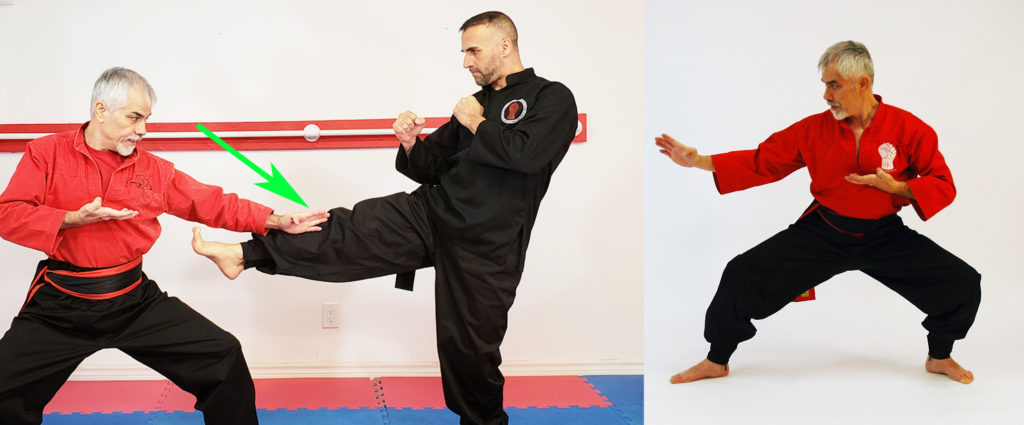
We use the edge of the hand as Soyeto. Soyeto hits as defense or offense. When incoming kick or punch coming to us, we can hit with the edge of the hand to defend that move. Reaction of Soyeto Defense stays fornt of the chest or beside of the opposite shoulder and the elbow bends minimum 135 degrees.
دفاع سویتو
سویتو تکنیکی است که با تیغه دست بعنوان حرکتی نفوذی یا دفاعی انجام میشود. دفاع سویتو را وقتی برای پوشش ضربه دست حریف بکار میبریم بایستی زاویه ۱۳۵ درجه را برای آرنج در نظر داشته باشیم. دفاع سویتو تقریبا مانند دفاع دوما عمل میکند و معمولا بخاطر باز بودن انگشتان دست، عکس العمل آن به روی سینه یا نزدیک شانه مخالف است.
دفاع سویتو زمانیکه برای پوشش ضربه پای حریف بکار میبریم بایستی آنرا از بالا به پایین بصورت ضربه به روی پای ضربه زننده کوبیده میشود و آرنج را تا جای ممکن که دفاع کامل انجام شود میتوان باز کرد
Umato Defense
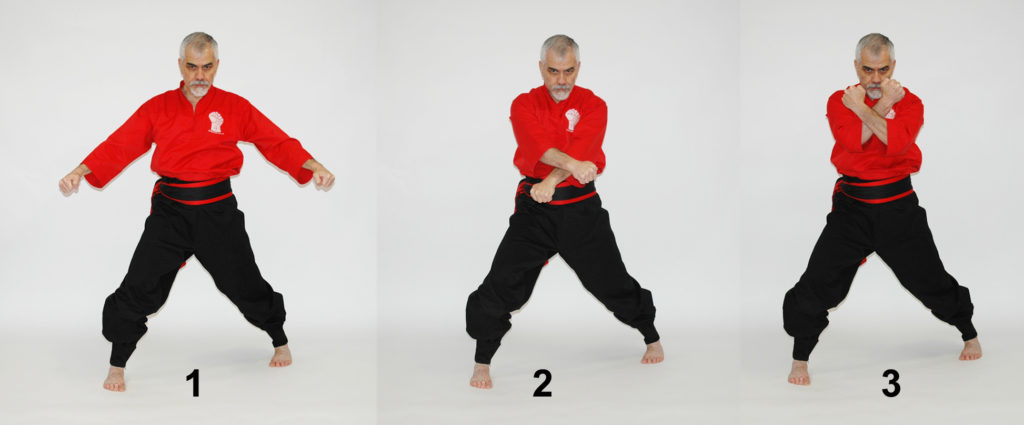
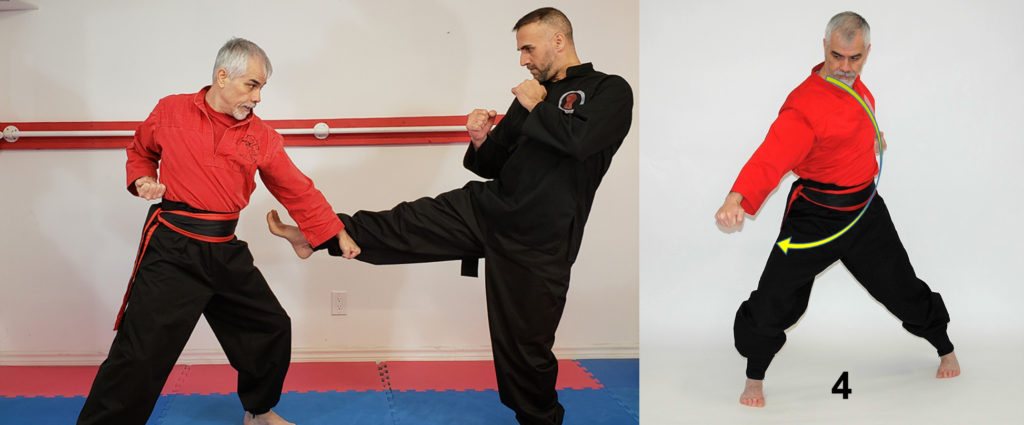
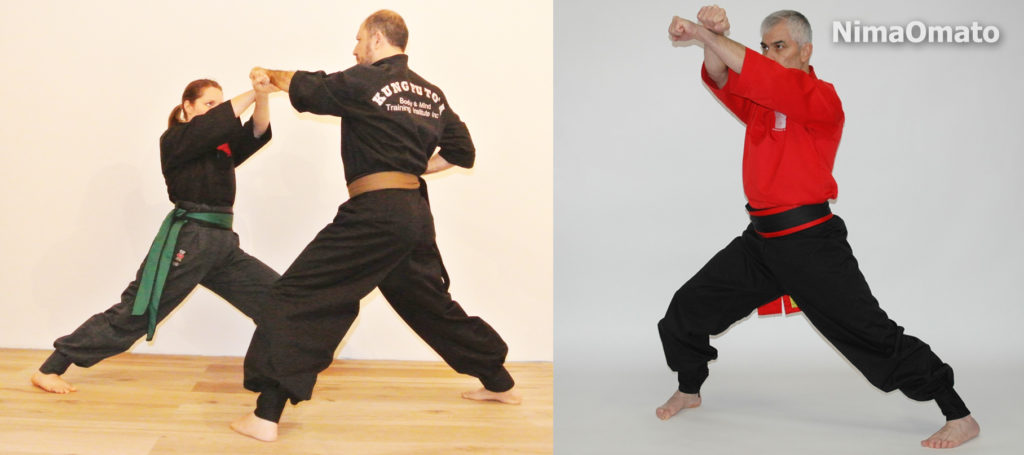
By making arms top of each other like “X”, to defend incoming punch from down to up (NimaUmato) or to defend a kick up to down (ToyoUmato).
دفاع اوماتو
دفاع با دو دست بصورت ضربدر از بالا به پایین (تویو اوماتو) برای خنثی کردن ضربه پای حریف به زیر شکم مانند (نیماکیتو). با توجه به اینکه برای انجام درست این تکنیک بایستی یک راتوی باز و بزرگ داشته باشیم. در غیر اینصورت دستها به اندازه کافی پایین نیامده و پوشش کامل صورت نخواهد گرفت.
همین دفاع را وقتی از پایین به بالا ( نیما اوماتو) برای دفاع ضربه دست یا ضربه پای چکشی میتوانیم بکار ببریم. قدرت گیری هر دوی این تکنیک ها از پهلو و عکس العمل مکمل انجام میشود
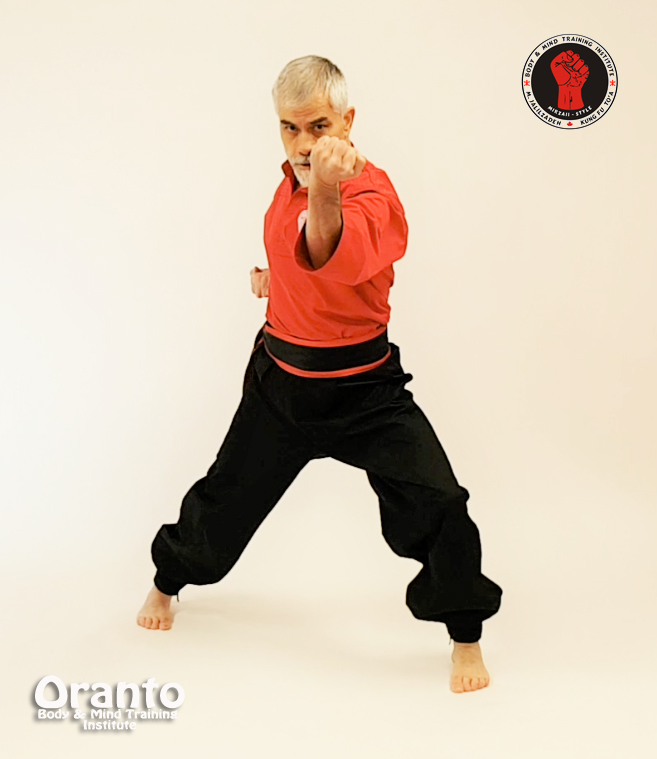
متو یا ضربه پیش مشت
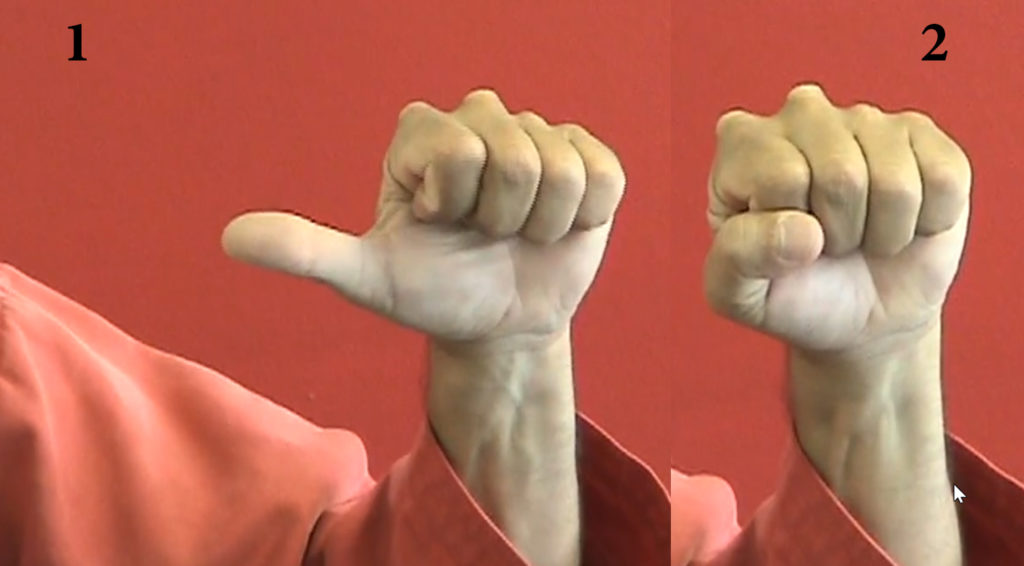
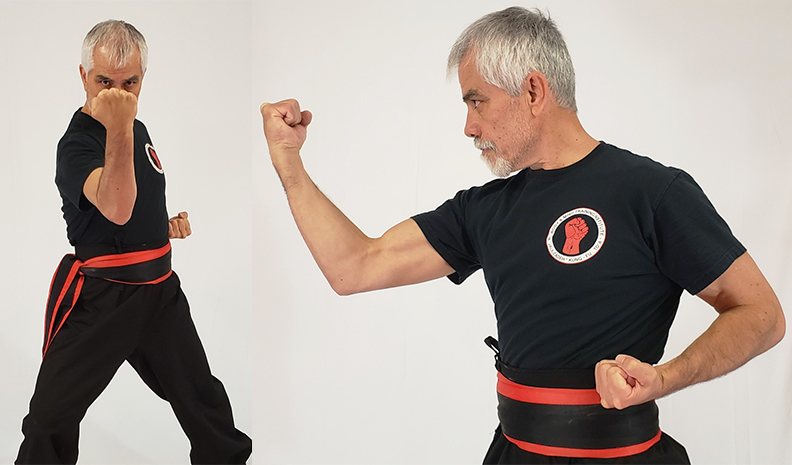
برای مشت کردن صحیح دست ابتدا چهار انگشت را تا نیمه طوری جمع میکنید که هیچ فضایی بین آنها وجود نداشته باشد سپس انگشتان را در کف دست گلوله میکنید (حالت ۱) بعد بند اول شصت را روی بند دوم انگشت سبابه می گذارید حالت ۲
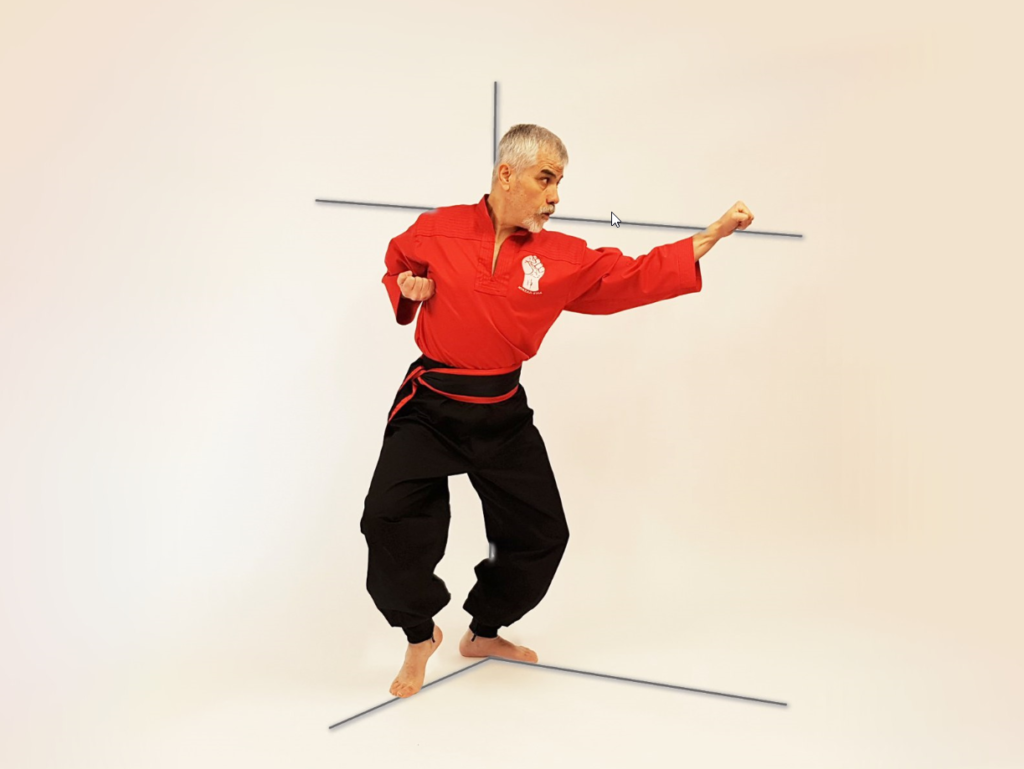
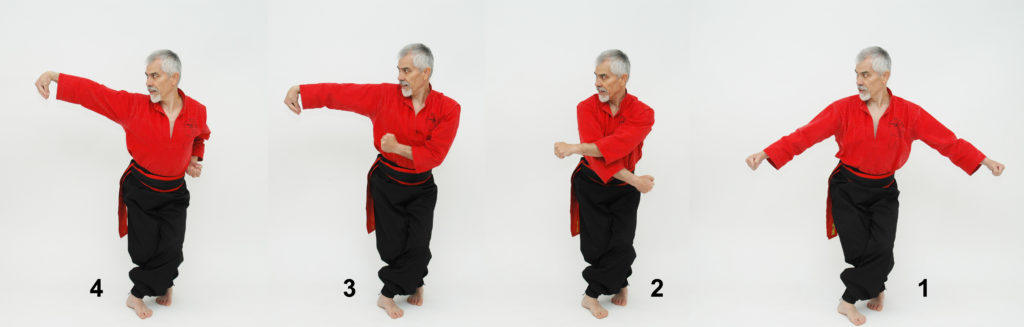
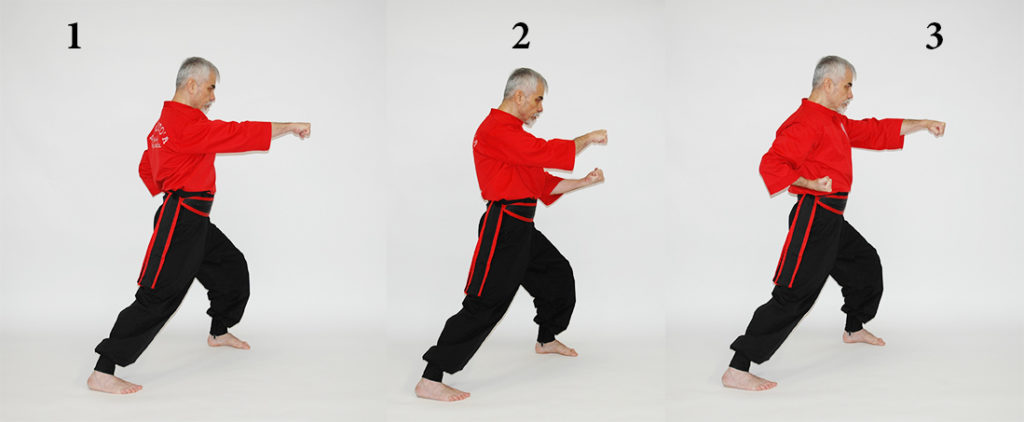
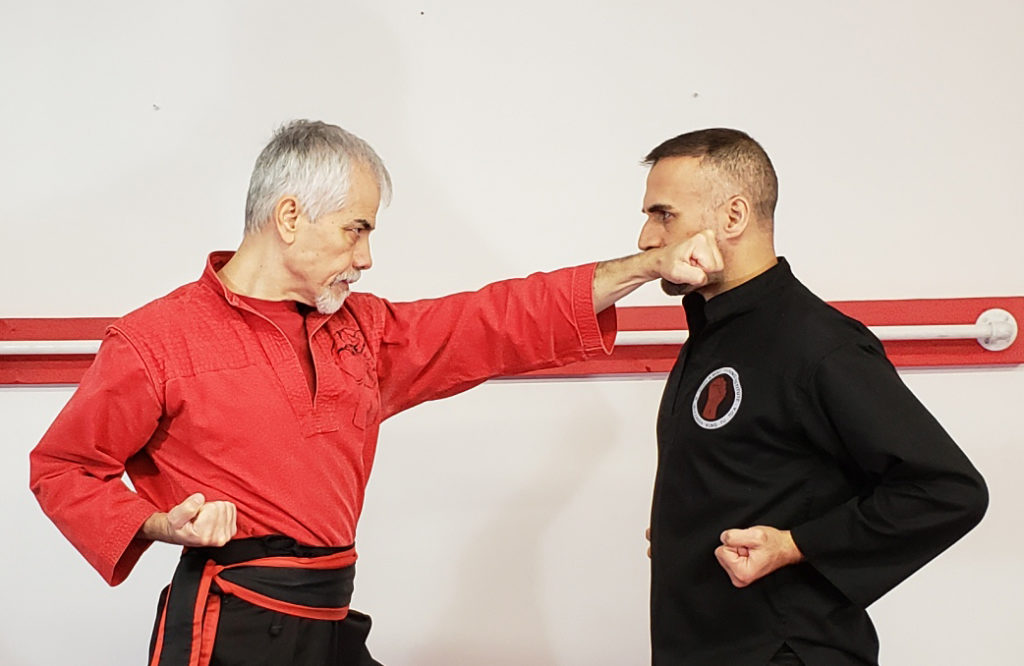
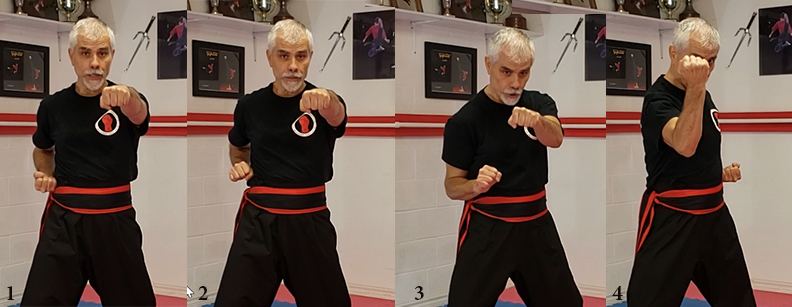
From Rato postion (1), bring the front arm (reaction hand) backward to the side of your body at the Sash level, at the same time move the opposite arm (action hand) forward (2). To give more power to the punch, both arms moves by making a “twist and turn”, a 180° rotation . During the movement, both arms must always keep the contact with the side of the body. Without moving the shoulder forward, keep the arms close to to the body as much as possible. This technique hits in front of the chest with the first two knuckles parallel to the ground (3). When hitting Mato, the wrist is slightly bent (~ 5° downward) so that the energy flows along the main bone of the forearm (radius)
حال برای انجام تکنیک پیش مشت بصورت زیر باید عمل کرد
قبل از هر چیز بحالت راتو یکی از دستان مقابل سینه موازی سطح زمین برای عکس العمل و دست دیگر بر روی شال قرار میگیرند (حالت ۱). برای انجام ضربه، دست روی شال با مماس بدن بجلو حرکت میکند و همزمان دست عکس العمل در جهت عکس به عقب. توجه داشته باشید که دستها تا حد امکان مماس بدن و نزدیک یکدیگر جا بجا میشوند (حالت ۲ و ۳). با توجه به اینکه دوران دستها ۱۸۰ درجه است، یعنی دست ضربه زننده که در ابتدا روی شال پشت آن به سمت زمین بود، در انتها با پیچش بدور خود حین حرکت پشت آن بسمت آسمان خواهد بود و دست عکس العمل برعکس آن. ضربه با دو پیش مشت اصابت میکنه و دست عمل کننده روبروی جناق سینه و موازی سطح زمین میباشد
Duma Mato
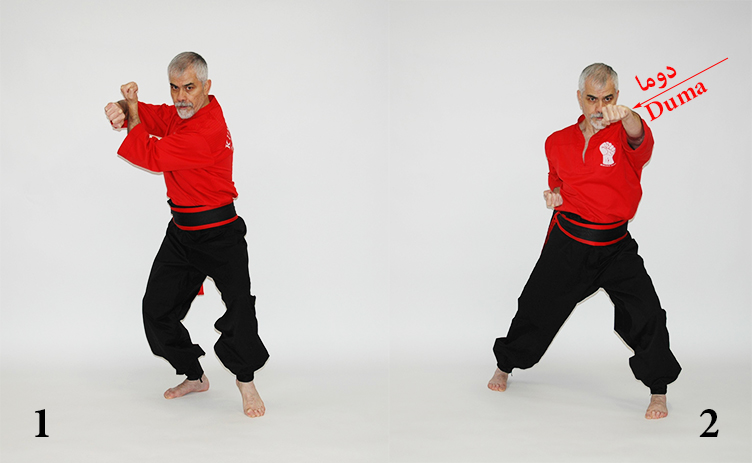
Move the action hand along the Sash line to the opposite side, to generate power turn the shoulders in the same direction. Then, by making a cross at the side, bring the action hand up and perpendicular to the ground while the reaction hand rises parallel to the ground (1). The action hand has to be inside and the reaction hand outside, the back of the fists are facing each other. Now by bringing the action hand parallel to the ground and moving the reaction hand back to the side of the body, hit Duma Mato with the soft part of the fist from the side and use the movement of the shoulders to give power to the technique.
دوما متو
برای انجام دوما متو ابتدا دست ضربه زننده به سمت مخالف خود برای قدرت گیری میرود طوری که دست عکس العمل موازی سطح زمین و دست عمل کننده عمود بر سطح زمین قرار می گیرد (حالت ۱). برای مثال، اگر با دست چپ تکنیک را انجام میدهید، دست چپ به سمت راست رفته و از داخل ضربه را با قسمت خارجی مشت بصورت حریف از پهلو میزند (حالت ۲). این ضربه را هم در حالت پیشروی و هم در حالت عقبگرد می توان بکار برد
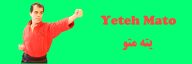
Yeteh Mato
“Yeteh” means “side” or “Side-way”. Yeteh Mato is a Mato that hits on the side line.
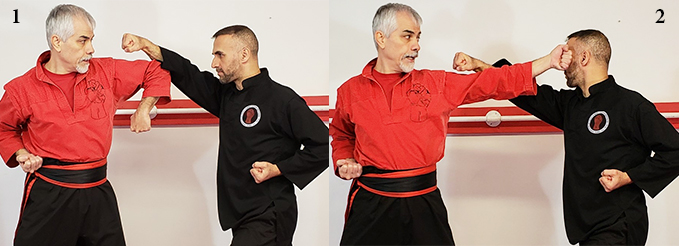
From Yeteh Rato and Chino (1), first turn the head and look to the side at your opponent (2), then to generate power bring the right arm (action hand) under the left arm (reaction hand) and at the same time move the body weight on the left leg by bringing the right foot closer to the left foot (3), bend the action arm and bring the elbow up perpendicular to the ground while the reaction hand goes to the side of the body and the same time move back to Yeteh Rato (4), then hit Yeteh Mato on the shoulders line with the first two knuckles by making a 180° rotation at the end (5). Yeteh Mato, Yeteh Rato and the reaction hand reach the final position in the same moment.
یته متو
یته در کونگ فو توآ یعنی پهلو، یته متو یعنی ضربه مشت از پهلو در مسیر شانه.
برای انجام این تکنیک با نگاه به مسیر ضربه (حالت ۱ و ۲) ابتدا در حالت ایستاده دست عمل کننده برای قدرت گیری از زیر دست عکس العمل (حالت ۳) با بالا آوردن آرنج برای پیشگیری و پوشش (حالت ۴) در یک خط مستقیم از مسیر شانه طبق (حالت ۵) با برگرداندن دست از مچ در آخرین لحظه با دو پیش مشت ضربه را به هدف می کوبیم. این تکنی را میتوان هم در حالت ثابت و هم با یک پسروی و پیش روی برای بهتر قدرتگیری کردن انجام داد. حالت ۳ و ۴
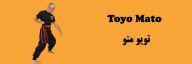
ToyoMato
ToyoMato is a technique that moves up to down like a hammer.
This movement hits the lower part of the stomach, groin and thigh.
We can also use this technique for bonken (breaking hard wood or brick).
تویو متو
تویومتو تکنیک چکشی است که از بالا به پایین حرکت می کند
این حرکت به قسمت تحتانی شکم، زیرشکم و ران برخورد می کند. ما همچنین می توانیم از این تکنیک برای شکستن اجسام (شکستن چوب سخت یا آجر) استفاده کنیم
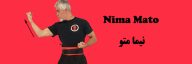
NimaMato
NimaMato is a technique that operate from down to up.
It is like a uppercut in boxing. This technique hits to the stomach or the face of the opponent. This move could be use as a defense, we can hit it under the incoming punch from opponent to defend.
نیما متو
ضربه مشت از پایین به بالا “نیما متو” گفته میشود. این تکنیک مانند آپرکات در بوکس عمل میکند ولیکن بعنوان یک تکنیک دفاعی هم میتوان آنرا بکار برد. یعنی میشه آنرا برای انحراف کردن ضربه دست حریف هم انجام داد. نیما متو را بمنظور تکنیک نفوذی برای ضربه زدن به شکم و صورت حریف بکار می بریم.
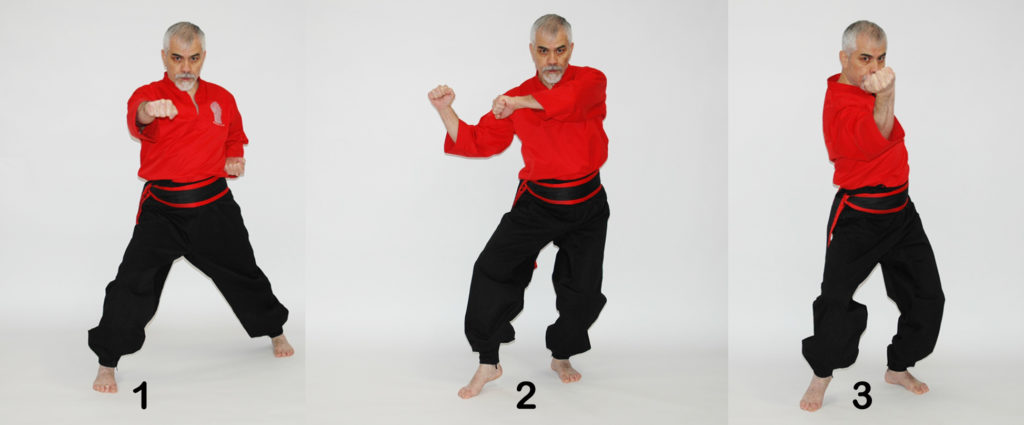
An important point about NimaMato is the “twist”.
From Rato position, keep the left arm forward as a reaction (1). Start the technique by turning the right hand (2). Then while moving from down to up, the hand twist and turn (3) making at the end a 180° rotation (4).
It is like a uppercut in boxing. This technique hits to the stomach or the opponent’s face. This move can be used as a defense, for example to defend by hitting from down to up to the opponent’s incoming punch.
موضوع مهم در ارتباط با دوران گیری این حرکت در زمان تمرین منفرد باید در نظر داشت این است که دست عمل کننده قبل از شروع حرکت (۱) بایستی یک چرخش ۱۸۰ درجه ای (۲) به مچ دست بدهید سپس از پایین به بالا (۳) تکنیک را با دوران و پیچش (۴) انجام دهید
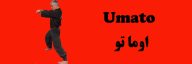
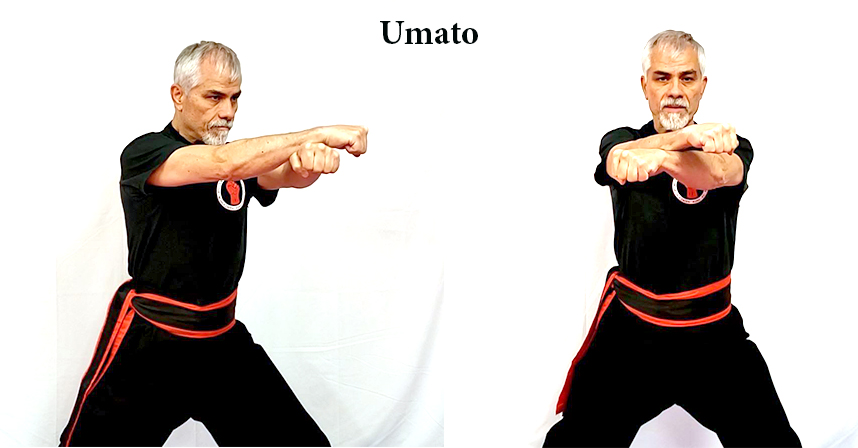
Umato Offense
Two paunches same time with the X position on the arms. This way if the opponent tries to void the attack with moving the sides, still there is a good chance to hit him with the either punches. Also the arms by touching each other (X) get more support and produce more power when they are in action.
اوماتو
دو ضربه مشت بحالت ضربدر از روبرو. در این حرکت اگر حریف سعی در جاخالی دادن به طرفین هم باشد باز احتمال برخورد ضربه به وی میباشد. در ضمن حالت ضربدر به دستها قدرت و استقامت بیشتری میدهد
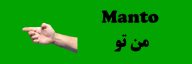
من تو
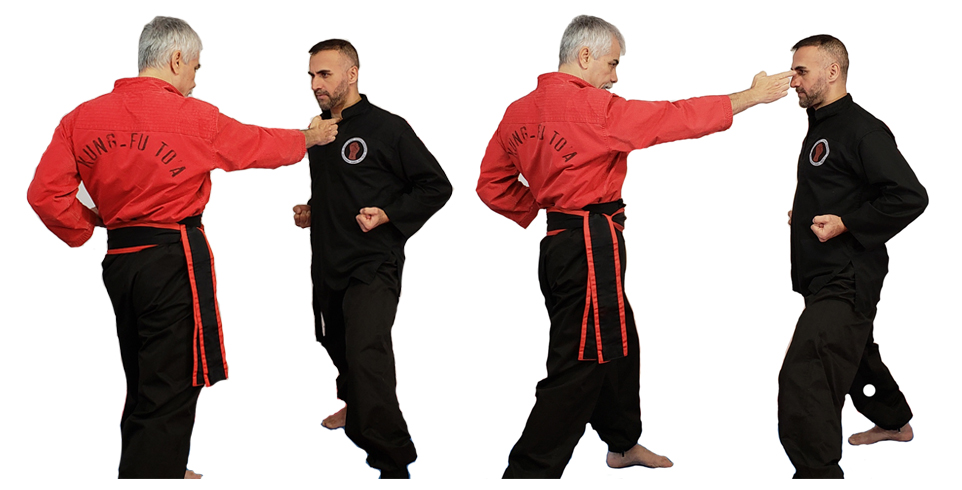
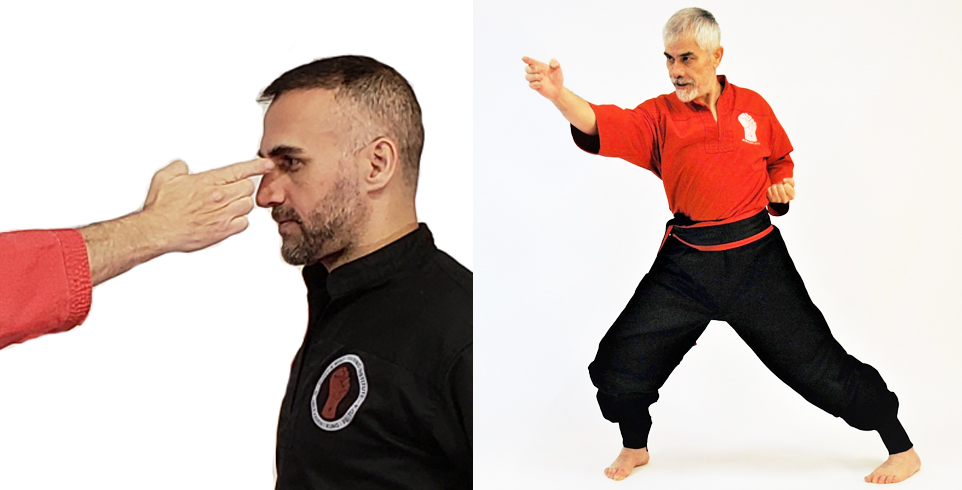
ضربه با یک انگشت (سبابه) به چشم، گلو و زیر دنده ها. با توجه به اینکه سه انگشت کناری بایستی در خود جمع شوند (شکل) و همینطور شست دست نیز جمع شده و در قسمت نرمی کناری دست فرو رود. بیشتری میدهد
Manto
This technique usually is good to hit the eyes, throat or under the ribs. It hits with the index finger which needs to be supported with the other fingers like in the pictures. Make sure to bend the thumb and protect it when hitting the target.
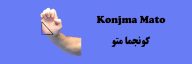
کونجما
ضربه با گوشه خارجی دست طوریکه انگشتان را بسته و دست را از مچ بسمت بالا و خارج خم میکنیم (شکل). این تکنیک را میتوان بعنوان یک تکنیک نفوذی و هم دفاعی بکار برد.
Konjma
Konjma hits with the corner of the hand. This technique can be used either as an offense or defense. It strike and hits with the corner of the hand by turning the wrist backward and bending the fingers inward (Pic).
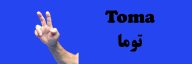
توما
انجام این تکنیک توسط دو انگشت سبابه و میانی اجرا می شود، طوریکه دو انگشت کناری و شست خود را جمع کرده و از آنها برای محافظت و برقراری قدرت نفوذ به دو انگشت عامل کمک میگیریم (شکل).
Tomma
Tomma (Pic).